


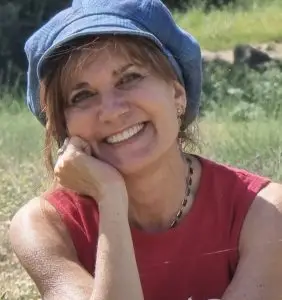
 Sue Stockdale interviews trailblazing conservationist Astrid Vargas in episode 143 of the Access to Inspiration podcast. Astrid shares her journey from childhood fascination with nature to leading efforts in bringing species like the Iberian lynx back from the brink of extinction. They discuss the importance of inspiration, systemic thinking, and community engagement in conservation, and delve into the ‘four returns’ model for landscape restoration developed by Common Land. Astrid emphasises the role of art, celebration, and collective action in fostering a sustainable future, offering insights and encouragement for anyone looking to make a positive impact on the planet.
About Astrid Vargas
Astrid Vargas is an award-winning conservation biologist with a track record in setting up, developing, leading, and monitoring environmental restoration programs. She has been a key figure in the recovery of three of the world’s most endangered species: the Iberian lynx in Spain, the black-footed ferret in North America, and the golden-crowned sifaka in Madagascar. Astrid believes in the power of art and inspiration to transform society. She is the founder of Inspiration 4 Action, an initiative that inspires communities to bring collective creativity into ecosystem restoration.
Find out more about Astrid Vargas and Inspiration 4 Action via website: her book website : Instagram : Facebook : Short Film – The Story of Alvelal
Time Stamps
01:22 Astrid’s Early Inspirations and Influences
04:50 The Journey into Conservation Biology
06:42 The Iberian Lynx Recovery Program
11:35 The Four Returns Model for Landscape Restoration
21:44 Art, Celebration, and Community Engagement
29:26 Advice for Young Conservationists
31:14 The Joy of Conservation and Final Thoughts
Key Quotes
- There’s a big need in endangered species programs to resolve conflict and to listen to each other and to find ways where we can all move forward together.
- It’s our own activity that’s causing the demise of so many species.
- The beauty of nature makes me want to act. It gives me the amazing love to try to do whatever we can so we don’t lose it.
- For an orange or for any fruit to not have seeds, you have to kill the flower basically.
- We need a different thinking than the thinking that caused this problem.
- What I love the most is when people come together and do something artful together, like a collective art
- Our mind has to move to a restoration, regeneration thinking.
Connect with Access to Inspiration: Twitter | Facebook | Instagram | LinkedIn
If you are enjoying this podcast – Say thanks…and become a supporter to help us continue producing quality audio content for our listeners. Click on link to make a small donation and leave us a message.
Other episodes we recommend are:
15. Marlina Moreno and Shannon Rivera: Why Conservation and Collaboration go hand in hand
38. Mariah Reader: Sustainability through eco-art
Astrid Vargas Transcription
Hi there, welcome to episode 143 of the Access to Inspiration podcast, and I’m your host Sue Stockdale. I’m delighted today to take us into the world of conservation. What if saving the planet could be joyful, creative, and inspiring? In this episode, I meet Astrid Vargas, a trailblazing conservationist whose work has brought species like the Iberian lynx back from the brink of extinction and transformed degraded landscapes into thriving ecosystems. Astrid shares her incredible story, from being captivated by nature as a child to implementing the transformative “four returns” model to restore biodiversity and community spirit in Spain. Whether you’re passionate about nature or simply looking for inspiration to make a difference, Im sure you will enjoy this episode. And for me it was exciting to meet her face to face at her home alongside the River Thames.
Sue: I’m sitting here in the wonderful space where Astrid Vargas lives and looking out into the River Thames and I’m really looking forward to this conversation. Welcome Astrid.
Astrid: Thank you so much. Thank you for coming over and for sharing your time with me.
Sue: Well I’m sure we’re gonna have a great conversation because we’ve got some inspiration looking out the window here, and inspiration is a key part of what you do in your work- so where did your story start, Astrid?
Astrid: If I move back in time, the first things I can remember is when I was around six years old that my cousin gave me a book called The Wonders of the Jungle. And there were all sorts of wild animals And there was this jaguar crossing the Amazon. And I was fascinated by that image. And I think that was the very beginning of, I would love to work with wild nature. Of course, as a child, I would love dogs and cats and bring stray animals home. And my mum was very open about letting me keep them in my room. So I always had a love for animals and nature, but for wild nature, I can trace it back to when I was six. And then as a teenager, of course, Attenborough, the documentaries, Life on Earth, The Living Planet. I would stop anything I was doing to make sure I was there to see those documentaries.
Astrid’s Early Inspirations and Influences
I was totally taken and fascinated by, and still am, in any of the Attenborough movies. I’m still totally inspired when I see how amazing nature is and his passion for telling the story. So that’s where my original inspiration comes from. There is also, we had our own Attenborough in Spain called Félix Rodríguez de la Fuente, and he inspired so many children of my generation. He had a program called El Hombre y la Tierra – Man and Earth. He was incredibly inspirational. And I remember he had one of the episodes about the Iberian lynx. And such an amazing Iberian cat it is. And that also inspired me and in the end I ended up directing the Iberian lynx conservation breeding program.
So a lot of things go back in a circle, back to the starting point. Like Attenborough is a neighbour. And when I moved here I started to write him. Letters, like love letters, it’s like thank you, thank you for so much you’ve done for all of us and he’s just such a gentleman, like he writes back on his own handwriting, like now we’re all in this speed moment of you send a text and it has to be shortcut, but knowing the old ways, you know, you take the time. You write a long letter, you put it in the mail with a stamp and he still does that at his almost 99 years of age. So that inspires me hugely.
Sue: So I get this sense of that connection to nature that you have and when you observe others having that connection to nature, the passion and inspiration that gives you.
Astrid: Absolutely. Nature. Art, beauty in general, so it’s natural beauty and the beauty created by humans, no? A beautiful piece of music can be so inspirational, or a piece of art, or a building. So, I’m inspired by beauty, but I think that’s a human aspect. We are all inspired by beauty. But the beauty of nature makes me want to act. Gives me the amazing love to try to to do whatever we can so we don’t lose it.
Sue: So, given that you have this inspiration and this passion, where did your career initially go?
The Journey into Conservation Biology
Astrid: Yes. Well, I decided very early on that I wanted to do a career in something that didn’t exist in Spain at the moment. It was just emerging in the U. S. and they’ve given it the name of conservation biology. But back in the late 70s, early 80s, it was just emerging. And somehow, in my teens, I found out about it, I think maybe at 16 or so, Michael Sule, that they were in the States, in California, and this new discipline wasn’t just about biology, but it was about integrating social sciences, economy, politics. Conservation is not just about biology, it’s about integrating disciplines, so we can preserve species and natural processes.
So, I thought, that’s where I want to go. So I studied vet medicine. I am a veterinarian by training in Spain, but I knew it was my ticket to be able to opt for a PhD in the States. So that was my plan. I studied vet medicine not to become a vet. But to get my visa stamp, let’s say. And I was born in Puerto Rico, so I am actually a U.S. citizen. Puerto Ricans, they don’t have Puerto Rican passport. They have U. S. passport. And that opened the ground for me to apply for scholarships. So I applied for a Ph.D. Well, at first I went and worked with animals for a year at the Conservation and Research Center of the National Zoo. But then I went for formal education in conservation. So I had a clear pathway that I wanted to follow but it was not available in my country. So I needed to find ways to get there through other means.
Sue: And with that experience and knowledge, then if we jump forward, you were instrumental in the recovery of the Iberian lynx,
Astrid: yes.
Sue: And that must be an amazing feeling to know that you’ve stopped a species from becoming extinct. How did it work? What happened?
Astrid: It’s the work of many people. It’s teamwork, and teams are so important, and having strong teams. So I led the team, but the team was doing the work, and then even after I left, so much has happened. So I cannot take credit for that. I am just proud to have been part of the process, and to have been able to listen to all different parts and trying to put ways forward. that were more harmonious than before. Because one of the things that happen in endangered species is that people fight a lot. And then we waste our energy in fighting each other instead of fighting what it’s out there that’s not allowing this species to thrive. So there’s a big need in endangered species programs to resolve conflict and to listen to each other and to find ways where we can all move forward together. So that is something that I like to do and I have done it in the Black Footed Ferret Recovery Program. The Black Footed Ferret is a very endangered North American species, a ferret, there were ten individuals left at some point in their life. I did my PhD on how to train them for survival after release and then I directed the conservation breeding program.
The Iberian Lynx Recovery Program
So I had that experience coming into the lynx already and it was very useful. So the ferrets helped the lynx a lot. And then the lynx has helped other species like the jaguars. So it’s very nice to think endangered species helping each other with the experience we gain through working with them. So with the Iberian lynx, it feels very, very uplifting and hope giving. And at the same time, it feels, but this is very fragile. And it can happen like it happened with the ferrets. The ferrets were doing really, really well. And then drought has hit the States so badly that the main prey, the prairie dogs, are really, really in dire straits, which makes everything that eats prairie dogs be in bad shape, too. And the ferrets are completely dependent on prairie dogs. So the black footed ferret went up, up, up in numbers. We were releasing them in many places, and suddenly they crashed quite a lot. So we came from more than a thousand in the wild to about 300. And I think they are increasing now. And better. But with the Iberia lynx we have more than 2000 in the wild. Maybe next year will be 3000. And it’s great and it’s exciting and we must celebrate. Celebration is very important in my book, but at the same time we cannot lower the guard because there’s so many threats out there that we have to really protect what we’ve achieved before it happens. For it can go back like it has happened with the black footed ferret.
Sue: So there are a couple of things I just want to pick up on from what you’re saying Astrid, because it seems to me, one is having long term thinking, and then the other aspect that I pick up from what you’re saying is about systemic thinking, a systemic perspective, to see the interrelationship between one part of nature and another. ? Are they important?
Astrid: Yes, and they are important in every aspect of life, like how do you keep up with the challenges and with not getting depressed about sometimes what’s going on, these huge fires, floods and all that stuff is to keep that long range perspective and that we can do things. There’s a quote from Attenborough that I really like, that it’s very hope giving, and it goes like, if working apart as humanity, we have driven ourselves to the point where we are, we’ve destabilised the whole planet. For sure, working together, we can reverse that trend. So if working apart we can mess up, working together we can make things better. And I have to keep that in mind all the time, it’s like, okay. So for me it’s important, long range thinking and bringing teams together. And bringing different initiatives, just weaving initiatives to find different solutions for different problems because we have lots of different challenges to address. So, yeah, systemic thinking, interconnection of people and of ideas and don’t give up. Look at the light at the end of the tunnel because there’s always a light and we have to really believe in that light.
Sue: That’s certainly true now, one of the things that I found interesting in the work that you’re doing, Astrid, is this concept of the four returns. I wonder if you could explain that to me.
The Four Returns Model for Landscape Restoration
Astrid: Yes. It’s a brilliant model developed by a Dutch organisation called Common Land. And his founder William Ferwerda. he’s the one that work with different teams to come up with this framework the main thing is how do we restore degraded landscapes? When we look at restoration, we cannot think about, about a farm on its own or a species on its own. We zoom out and look at the whole entire system and you work at a landscape level. And in a landscape, you have different areas, different zones. So, there’s a model developed by Common Land that says that to restore any degraded landscape, we need to work on four returns in three different zones and for a minimum of 20 years, which is a whole generation. The four returns, the first one is my favourite one, which is the return on inspiration. Then the return on social capital. The return on natural capital and the return on investment. Usually we hear mostly about the return on investment before setting up this kind of businesses and programs. But you rarely ever hear about the return on inspiration. What does it take to change a landscape is the inspiration of people.
How do you inspire people? Well, depending on where you are. But usually has to do a lot with identity. You’ll be proud of your land, of who you are as a culture, so to really do things that enhance the identity of local people. So return on inspiration is about creating hope, mostly, and this energy that it’s necessary for change. Sometimes many organizations say, yeah, but what we do is already inspirational. Well, maybe for you, but not for others. How do you hear about those others that are not inspired by what you think you’re doing? So you bring them into the table and bring things that would inspire them. So return on inspiration is about hope.
The return on social capital, so you imagine you’re in a landscape, there’s lots of communities, is how to create jobs and how to bring capacity to the system, how to train people to do different things. The third return is natural capital, we just saw the social, and the natural capital, it has three parts. First, restoring soils that are really degraded in these landscapes. Second, harvesting water because we work on very dry areas that are becoming more desertified. And then, recovering biodiversity. And that’s what I really love, the part of like, okay, we are losing life at an unprecedented rate. And, you know, we didn’t have a meteorite falling or anything.
It’s our own activity that’s causing the demise of so many species. And we think, so what? You know, who cares? So they go and they go, yeah, but everything is interconnected and we don’t know which threads we are breaking. And we have to be mindful because in the long run, life on Earth will continue. Because it’s been going through incredible amounts of periods and it’s always come back. But maybe we are making this inhabitable for humans, so we need to be careful about how we are destroying other species that may be so important for clean air, clean water, our own digestion, like many bacterias and all that. So return on natural capital is soil, water, and biodiversity. And the fourth return, return on investment, is about creating businesses that are kind with nature, looking for investors, usually from the northern part of the world that have more money, to invest in businesses that maybe don’t give them as high a return, or are very profitable business, but there’s a lot of family foundations that want to invest in something with meaning for the future that is changing the system.
So they are willing to get maybe a lower return, but still invest in that. So those are the kind of funders that Common Land and looks for these projects, these for return projects. And it can be, it usually has to do with regenerative agriculture because regenerative agriculture, restore soils. biodiversity and brings communities together. So it’s part of the equation.
Sue: Hmm, that’s really interesting. Astrid, can you give me an example of how this works in practice?
Astrid: So for example, in the area where we work in southern Spain is 1 million hectares. That’s 2. 6 million acres. of steppe plains. You think of the step in Patagonia or in Mongolia, but in Southern Spain, we have our own steppe. It’s very degraded. It spans 2. 6 million acres, and that’s the ecosystem that, where we are working to prove the concept of the four returns.
Sue: If you are enjoying this episode then you can listen to over 100 other episodes on all sorts of subjects ranging from adventure and exploration to social good and impact. We have organised them all now into 15 categories on the website to make it easy for you to find them. Just hop on over to accesstoinspiration.org and have a look for your favourites. Now back to Astrid.
Astrid: So we started it there ten years ago in 2014, mobilising local farmers to move from conventional or organic agriculture into regenerative and for about eight or nine years, we’ve been doing a very bottom up approach of mobilising local people. There’s more than 550 members of this organisation moving into regenerative practices. So all that is good. But at the same time, you need the top down approach. So we have had the bottom up grassroots, and about two years ago we started with mobilising the local governments, to sign a manifesto for a regenerative territory. And this has to be done in a way that no matter what government is in charge. This manifesto has been approved in what they call Pleno del Ayuntamiento. So it’s the mayor’s plane where all the political parties have to agree. And once you have the signature of all political parties, you have support for this manifesto. And once you have a number of municipalities signing. We have, I think it’s 78 municipalities there, so there about. Once you have a number of 20 something, I don’t know the exact number, then you can go to central government and try to influence policy. So one thing is, okay, we can do this all at a grassroots level, but we need to change policies that are really destructive of the system. destructive of nature.
And some of them we don’t even know. For example, all these pesticides that we use in agriculture, we don’t need so much of that and there’s many other methods. But for example, we like oranges without seeds because they are easy to eat. For an orange or for any fruit to not have seeds, you have to kill the flower basically. So in the moment they come out you spray when the orange tree is flowering, and then anything, any pollinator that goes there to feed from those flowers will die. So to get our oranges without seeds, we’re really wiping out lots of pollinators. I think the consumer has no idea that this is going on. Because it’s like, well, okay, I have some seeds, it’s not so bad. I’m going to kill all the butterflies and bees and everything just for me not to have seeds in there. But we don’t know.
It’s the same with the almonds. We have rain fed almonds, which only get the rainwater. The trees are less productive. You get less kilos per hectare of almonds. But the almonds are much more nutritious. Whereas the irrigated almonds that water has a lot of pesticides, many times they put a lot of things to kill the pollinators. And then the irrigated almonds, deplete the water table. They’re sucking up a lot of water from the system. That’s why California, which was number one producer of almonds, is now in very bad shape. Of course, with the fires, that’s bad. But besides that, they’ve killed pollinators and they’ve depleted the water table. You as a consumer, you don’t know if your almond has been irrigated or rain fed. We have no idea of that and make a humongous difference to the ecosystem. So we need more information and more awareness to be able to make choices that in the long run are going to influence our well being and the well being of our children because we are depleting life on Earth.
We are depleting microorganisms in the soil, pollinators above ground and everything. The data shows a 70 percent decline in 50 years of biodiversity in general. There’s a study that happens every two years by WWF called the Living Planet Report and they’ve been following 14, 000 populations of animals around the planet for 50 years, since 1970, early 1970s. So they have the data of how these different populations progress and they are disappearing, you know, especially freshwater fish, really bad shape. Pollinators in some areas, like in the UK, 80 percent decline in 50 years. It’s a lot. It’s a lot.
Sue: I can tell you’re so passionate about this subject Astrid and you have the knowledge to be able to tell us stories to engage and inspire our listener. Luckily we’re on the Access to Inspiration podcast so you’re in the right place. And I’m hearing from you around that systemic perspective, how do we engage people by giving them hope and getting them involved in local activities? Now, I also know , art plays a role.
Astrid: Yes.
Sue: So, tell me about how art and that creative aspect plays into your work.
Astrid: Yes, thank you for that question. Yes, and I’d like to answer also about another part of the inspiration that plays a huge role is celebration. So we look at art and celebration. Art, it’s important because it allows us to discover things that we cannot discover so easily with a rational mind. And, suddenly you can tell things through a book or through a story, through a song that touches you deeply and makes you think about things that you wouldn’t if you think, I’m going to think of this question and suddenly, boom, the answer comes from from the right side of the brain. It is really joyful too, or it is really healing to scratch canvas, or whatever, but whatever it is, you, it’s a way to expressing yourself using different means. And what I am up for is collective art, because usually art is a very individualistic thing, and I do, I love to paint like that, this, that here, and, I love to do pottery. But what I love the most is when people come together and do something artful together, like a collective art. It’s also healing for ourselves, it makes beautiful connections, and then you leave a nice legacy in the landscape.
Art, Celebration, and Community Engagement
So for example, as part of Inspiration Projects, we had Art for Action, which is our art for nature. What can we create with our hands together that leaves something that helps biodiversity? Like, for example, insect hotels, or butterfly homes, or all these just simple things that 5, 10, 20 people can get together and build structures, then you put them in the fields and you’re serving a purpose.
Or what we are doing with the book, I wrote this book called On a Butterfly’s Wing, Lessons from Nature on Embracing Change, it’s the autobiography of a butterfly that lost a wing. When she fell into my mum’s plate of soup, but then she lived her whole life as a butterfly and ended up getting a boyfriend and laying eggs and everything with only one wing, which is an amazing thing for a butterfly because they need to fly to, to attract each other and all that. So with the proceeds of that book, we bring the community together. For an art project, which is creating a huge butterfly for the butterflies. And this means to to use aromatic plants to build a hedge in the shape of a butterfly with like with rosemary or lavender, santolina, the different aromatic plants that are good for butterflies and pollinators.
And so you end up with a shape of a butterfly with different colours that change colours throughout the seasons and also you want to put plants that will flower in the winter so pollinators get some food in the winter, too. But at the same time you, between all of us, we are planting a sculpture that stays there. And that restores soils, it fixes soils, it can harvest water because it’s more spongy the soil, and it helps biodiversity, it feeds the pollinators. When we do this, we also have the vision of grandparents and grandchildren coming to this together. Because in the future, when this sculpture is just big and full of flowers and full of butterflies feeding on those flowers, a kid can say, I planted that with my grandma.
You know, it attaches you emotionally. It’s a story to it. Yeah. And about inspiration has a lot to do with your own identity. It’s a way to root your identity. So for the butterflies, we want to make the biggest land art project in the world. In one million hectares, 2. 6 million acres. Plant as many of these butterflies as possible in schools, municipalities, in festivals with young people. And then if you do this at a huge scale, you’re actually providing a lot of food for pollinators, too.
Sue: What a brilliant idea. How did that idea get generated, then?
Astrid: Well, it was when I finished the book in Spanish, and I was at a friend’s house, and it just came to me. I don’t know, it’s just like, wow, we could do this, you know, in the area of Alvelal, there is a cave full of prehistoric cave paintings and we represented one of those cave paintings in 3D with aromatic plants covering three hectares. So almost seven acres. That’s quite the size. It’s huge. Yeah, and that idea I had one day just looking on it from the top of a mountain and thinking of the Nazca lines And then I thought what if we do it like the Nazca lines, but with aromatic plants. So we feed animals with pollinators and we got the funding, we did it, and the next step it was after the book. It’s like ha I could donate all the book money to buy aromatic plants and then bring the community together and do this inspirational activity together that leaves a legacy that brings people together, that connects grandchildren with grandparents and hopefully that will get full of butterflies and pollinators at some point.
Sue: So it’s a brilliant idea and maybe some of our listeners are thinking as they’re listening to you speak, Astrid. Wow, I’ve got ideas of things that I could do in my local area that we could do. And then they never get from the idea to the implementation. Yes. So that’s a step that often scuppers many projects. How do you overcome that?
Astrid: I talk to people that know much more than me, so it’s like, okay, who knows a lot about butterflies? Who knows a lot about aromatic plants? And then start, you think this is feasible and it’s possible? Yeah. If they, the experts say, yes, we can do this. Then it’s a matter of start tapping. people that would be interested in funding something like that. But in my case, it was with my book, so it was very easy. I just wanted to put the money into something that would bring the community together to make Habitat for Biodiversity. But how you overcome that, I think once you have the idea, you need to know what do you need. to make that idea a possibility and start talking to the people that know about it and get people excited and then you go along together.
Sue: The two things I’m picking up Astrid, is about the collective element again, it’s not a journey necessarily just to do on your own, but to bring other people together. And the power of storytelling, that creating a compelling story that is engaging, inspiring to an investor, to a community, is also a key part of taking things forward, turning that inspiration into action.
Astrid: Absolutely. Storytelling is how we evolved. We evolved around a campfire, telling stories from our grandparents to their grandchildren and so on. And now, okay, we have TV, which is storytelling, and of course books and all that stuff, but that element of coming together as a community to talk about a situation, and suddenly you can understand things that you wouldn’t understand or could not probably digest or integrate if it was like so clear, this is the situation that we’re facing. But if it’s suddenly it’s another island and there’s a whole story there, then we can understand things about our community and ourselves in a much more. comprehensive and holistic way.
Sue: So if you were going back and young Astrid, if you think back to yourself as a youngster, what advice would you give to that young person? Knowing now what you know about what it takes to be in the world of conservation and protect nature.
Advice for Young Conservationists
Astrid: Well, young Astrid had a much more hopeful future than a young Astrid now, you know, it’s a very different era. When I was young, you had the world, we say in Spanish, I’m going to eat the world. And now if you’re young, the world is kind of eating you. It’s changed completely. So that’s why I love to work with young people. It’s a very challenging situation for all of us, but especially for them and because their thinking is different than ours. So my advice of that Astrid back then, let’s say that we put her nowadays in 2025 I would say just love what you do, and do it from the bottom of your heart. Just pour your love into what you’re doing, and connect with people, and just believe, don’t give up. Just believe that this is possible, if we can, coordinate our efforts together and everyone can work from their guts, from their passion, from their very heart. Well I think of course we can do amazing stuff together. So, my advice would be work from your very heart and believe that you can. Connect with people that make you sing too. And just believe in that light at the end of the tunnel because it’s there if we work together.
Sue: And such an important point if we work together at the end of what you were saying there, Astrid. Now, sometimes people’s perception about conservation is it’s going to require sacrifice. It’s going to require us to make do with less. There’s going to be a poorer quality of life or our situation as a result. That doesn’t always tie up with an inspirational message because one’s about loss and one’s about hope and possibility. So how do you respond to people who might come from that perspective of this is too hard, I’m going to lose things. Life’s going to be more difficult for me. So I’m not going to go and engage in conservation.
Astrid: Yes. And this is, I think, one of our problems as environmentalists. We’ve just really taken the doom and gloom approach and that has turned off a lot of people, which is a bummer. So the idea is that, okay, we can turn this around and we can have fun in the process and it’s not about having fun all day long, although that’s good if you can, but we can do a lot of things for the environment. I think at the moment you bring people together. And you have some nice drinks and some nice food, then magic happens, people are happy, we can sing along or play some nice music and then start people to make the natural connections that would mean. I think we need to create spaces for celebration, that where we celebrate that we can turn things around with our own hands together.
So that very celebration is like, hey, you guys. We have challenges, and we are seeing, the major floods, all this stuff that’s happening, and some of it is very scary, and it’s way beyond our control, but there’s tons of things that we can control, and scientists tell us we are still on time. So we hold on to that. We’re on time, and we can have fun. How are we gonna do this? Enjoying it. But I think that’s a way forward that we need to change our narrative saying okay. Yeah, we have messed up. We have big challenges and we can turn this around. But for that we have to work together and, and create spaces for celebration, not being so serious all the time, in this kind of meeting so serious, and then hours on Zoom and this stuff. It’s like no, let’s just have a party.
Sue: I love what you’re saying there.
Astrid: I think we need to put joy in the front of our compass a little bit we can come together, have a party, and restore. Like we do in the Regeneration Festival. This is a festival that we did in one of the farms in the Albelal Territory. And there were three days to restore a landscape. And we planted lots of trees, restored a mountain area, a river area, and a crop area. And through the morning we were planting, in the afternoon there were workshops, even about business development and business exchange between people.
And at night, mega party, but big like a proper true festival. And at the end we left the area better than it was. So you can celebrate and restore at the same time. So I think it’s a mindset we have to change the mindset from a very extractive mindset of our whole economy is based on extracting and dumping. And that’s what’s causing the problem. We need a different thinking than the thinking that caused this problem. What we’re trying is to put patches with the same kind of thinking and our mind has to move to a restoration, regeneration thinking. We extract, but instead of dumping, we have to see, okay, what have we taken of nutrients out of the soil? How do we restore them? What kind of organic matter we need to put there? And to bring that kind of thinking at different levels. And one of the fuels to do that has to do with inspiration. And has to do with the joy of doing this. It’s like, wow, we can change things around and have fun in the process.
The Joy of Conservation and Final Thoughts
Sue: What a lovely way to bring our conversation to a close, Astrid, to think about creating that joy and using inspiration as a way of regeneration and regenerating people’s energy into conservation and preserving nature. Finally, if people want to find out more about you and the work that you do and your book as well, how might they be able to do that?
Astrid: Yes, I can give you some links. I have a website, it’s called Inspiration for Action, and it talks about biodiversity, landscape restoration, art for action, and community engagement. And then the book, I love the fact that it’s the autobiography of a butterfly, but it’s a very scientific book, but told in a very fun way. And it is a way of communicating a very difficult problem. It’s pollinators are becoming extinct, but giving you solutions to do things about it. So we have a website that is about the book and about solutions, and we have an Instagram page about the book. It’s on a butterfly swing book. And there we also provide, what kind of plants can you plan to attract butterflies or to feed the caterpillars and just different solutions told enough fun way.
Sue: Wonderful. Well, I’m sure, listener, I recommend you go over and look in those websites and Instagram and find out what action you can take to do a little bit of regeneration of nature in whatever part of the world that you’re in. It’s been a lovely conversation with you, Astrid. I very much enjoyed it. I can feel your energy and your passion as speaking to me here, and I hope that you continue on with the successes that you’ve had to date.
Astrid: Thank you. Thank you, Sue. Thank you for thinking of me.
Sue: I hope you enjoyed what Astrid had to say and it helped you get a different perspective on conservation. and how it ties up with inspiration. And you know that this podcast was free to listen to, but it’s not free to make. so if you’d like to show your appreciation then take a moment to click on the buy me a coffee link on the show notes to leave a small donation and we can enjoy a cup of coffee when producing the next episode. Your support really encourages us to continue producing quality audio content for our listeners. Next time my guest will be Jayshree Seth who was appointed 3M’s first ever Chief Science Advocate to communicate the importance and benefits of science in everyday life. I hope you can join me then.
Sound Editor: Matias de Ezcurra
Producer: Sue Stockdale